 Save
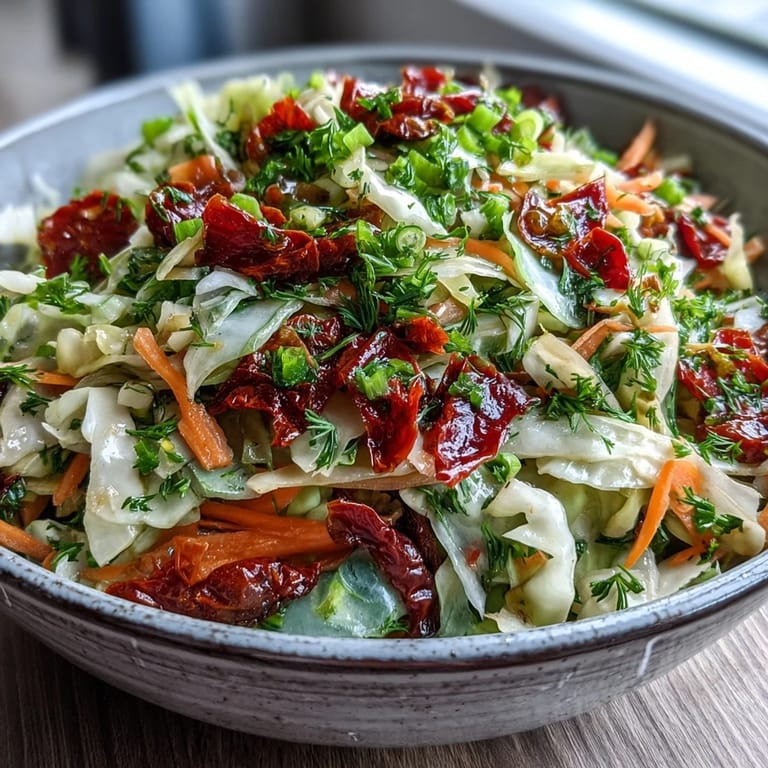
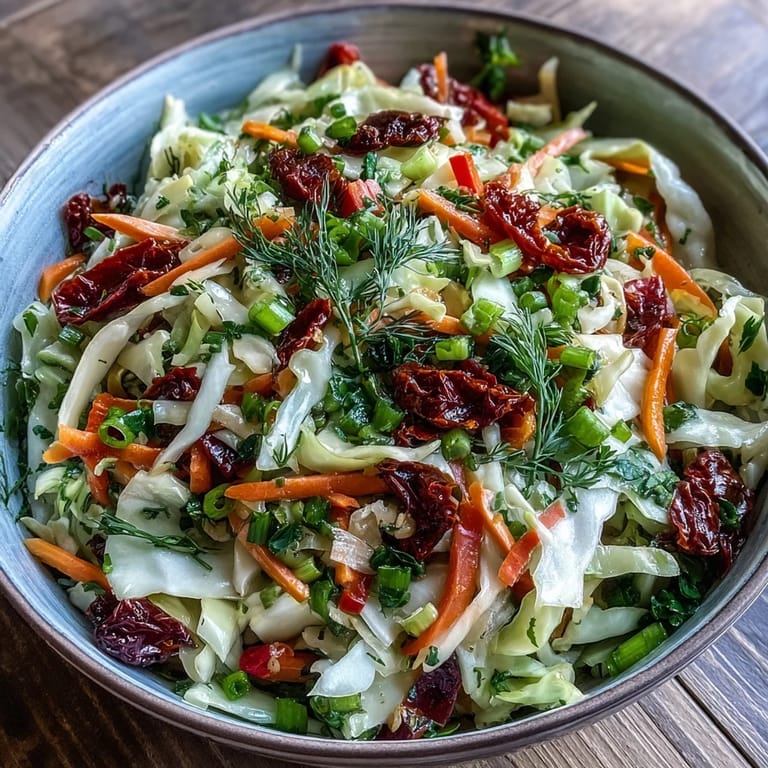
Save My neighbor showed up one afternoon with a jar of homemade sun-dried tomatoes, still glistening with fragrant oil, and challenged me to use them in something other than pasta. I grabbed whatever vegetables were lounging in my crisper drawer and threw together this cabbage salad on a whim, thinking it might be forgettable. Three bites in, I realized I'd stumbled onto something genuinely special—the kind of salad that tastes more interesting the longer it sits, as if the vegetables are slowly trading secrets with each other.
I served this to my partner one evening without fanfare, and they asked me to make it again the next night. That doesn't happen often in our kitchen—usually there's at least a week of other ideas in between. Now whenever we grill fish, this salad appears without discussion, as though it's simply understood.
Ingredients
- Red cabbage, 3 cups thinly sliced: This is your hero—it's sturdy enough to hold up to the dressing without getting sad and wilted, and it brings a natural sweetness that balances the vinegar beautifully.
- Green cabbage, 2 cups thinly sliced: The milder sibling that keeps things from becoming too bold, adding texture without overwhelming your palate.
- Carrot, 1 medium julienned: A thread of brightness and subtle crunch that reminds you this is a fresh, living salad.
- Red bell pepper, 1 small thinly sliced: Its sweetness whispers underneath the stronger flavors, keeping everything in conversation rather than letting any one ingredient shout.
- Spring onions, 3 thinly sliced: Don't skip these—they add an oniony bite that wakes up every other ingredient the moment you taste it.
- Sun-dried tomatoes in oil, 1/2 cup drained and sliced: These little flavor bombs are the reason this salad exists, so choose ones that smell alive and taste intensely of tomato.
- Fresh parsley, 1/4 cup chopped: The green note that makes everything taste fresher than it has any right to.
- Fresh dill, 2 tbsp chopped: Just enough to whisper rather than shout, adding an anise-like depth that plays beautifully with the vinegar.
- Fresh chives, 2 tbsp chopped: A gentle onion undertone that bridges the spring onions and the herbs.
- Extra virgin olive oil, 4 tbsp: This is where quality actually matters—use one you like eating straight, because it's the backbone of your dressing.
- White wine vinegar or apple cider vinegar, 2 tbsp: The acidity that makes the whole salad sing, so choose based on which flavor profile speaks to you.
- Honey or maple syrup, 1 tbsp: A touch of sweetness that rounds out the dressing without making it dessert-like.
- Dijon mustard, 1 tsp: This tiny amount is doing more work than it appears—it emulsifies and adds a subtle complexity that people can't quite name.
- Garlic, 1 clove finely minced: Go gentle here, as raw garlic can become aggressive overnight, so taste before you commit to the full amount.
- Salt and black pepper to taste: Season in layers, not all at once, so you can actually taste what you're doing.
Tired of Takeout? 🥡
Get 10 meals you can make faster than delivery arrives. Seriously.
One email. No spam. Unsubscribe anytime.
Instructions
- Gather and slice everything:
- Use a sharp knife and take your time with the cabbage—thin, even slices matter because they'll soften at the same rate and hold the dressing better. The visual consistency is half the pleasure of eating this salad.
- Build your salad bowl:
- Combine the cabbages, carrot, bell pepper, and spring onions in a large bowl first, mixing them so they're distributed evenly. This way, when you add the smaller components, everything's already in conversation.
- Add the herbs and sun-dried tomatoes:
- Scatter the fresh herbs and those gorgeous sun-dried tomatoes on top without mixing yet—it keeps them visible and honors how lovely they look before they dissolve into the greens.
- Make your dressing:
- Whisk the olive oil, vinegar, honey, mustard, and minced garlic together in a small jar or bowl until it looks slightly creamy and emulsified. This takes about a minute of actual whisking, so don't rush it—the emulsification is what holds the flavors together.
- Dress and toss:
- Pour the dressing over everything and toss until every piece of cabbage is glistening. Use your hands if you need to—there's no shame in a salad toss that feels right.
- Taste and adjust:
- This moment matters—taste it and see if it needs more salt, pepper, or even a squeeze more vinegar before you let it rest.
- Let it rest:
- Ten minutes on the counter gives the vegetables time to soften slightly and the flavors to start finding each other. You can make this earlier if you want, but don't dress it too far ahead or the cabbage will weep and the dressing will separate.
 Save
Save Last summer, I made this for a cookout where three people came back to the kitchen asking for the recipe. That's when I realized it wasn't just good, it was genuinely memorable.
Variations That Keep It Interesting
This salad is flexible enough to change with the seasons and what's calling to you. I've added crumbled feta on cooler evenings when I wanted something richer, or swapped the spring onions for thinly sliced red onion when I wanted more punch. Sometimes I toss in shredded beets if they're fresh, which turns the whole salad deep purple and earthy in the best way.
Pairing and Serving Thoughts
This salad doesn't demand a complicated meal around it—it's genuinely happy alongside grilled chicken, baked fish, or even a simple grain bowl with roasted chickpeas if you want it to stand alone. I've also served it as a side at picnics where it held up better than mayo-based salads, staying bright and fresh even hours later, which made people skeptical of my abilities but in the most flattering way.
Make It Your Own
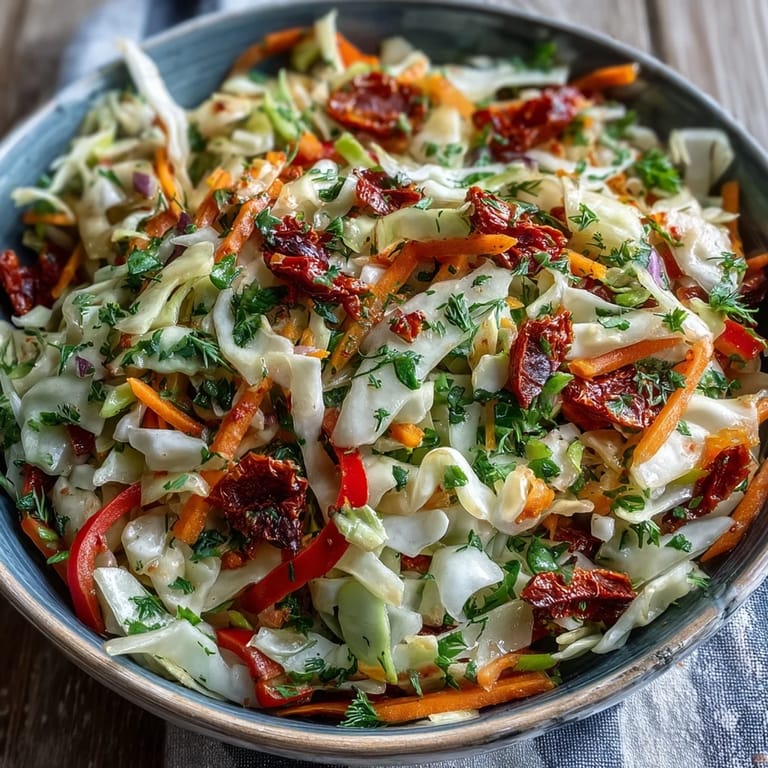
The beauty of a vegetable salad is that it invites you to listen to what's in your kitchen rather than dictate what should be there. The framework stays the same—crunchy vegetables, a good dressing, fresh herbs—but the details are yours to play with. This is how recipes become truly yours rather than just things you're following.
- Toast sunflower or pumpkin seeds in a dry pan and scatter them over top for a crunch that actually stays around.
- If you want more substance, add white beans or chickpeas without overthinking whether they belong.
- The dressing works beautifully with other greens too, so consider mixing in some arugula or baby spinach if your mood has shifted.
 Save
Save This salad has become the kind of thing I make without a recipe now, adjusting based on what's fresh and what I'm feeling. That's when you know something has truly landed in your kitchen.
Kitchen Guide
- → Can I prepare this salad ahead of time?
Yes, you can prepare this salad up to 4 hours in advance. Keep the dressing separate and toss just before serving to maintain the crunch of the cabbage and vegetables.
- → What can I substitute for sun-dried tomatoes?
You can use cherry tomatoes, roasted red peppers, or dried cranberries as alternatives. Each will provide a different flavor profile but will complement the crunchy cabbage beautifully.
- → How do I make this salad vegan?
Simply replace the honey in the dressing with maple syrup or agave nectar. All other ingredients are naturally plant-based, making it an easy vegan conversion.
- → Can I use only one type of cabbage?
Absolutely! You can use all red or all green cabbage if that's what you have available. The mix provides visual appeal and slightly different textures, but either works wonderfully on its own.
- → How long will leftovers keep?
Store dressed salad in an airtight container in the refrigerator for up to 2 days. The cabbage will soften slightly over time but remains flavorful and enjoyable.
- → What proteins pair well with this salad?
This salad complements grilled chicken, fish, shrimp, or tofu perfectly. You can also add chickpeas or white beans directly to the salad for a protein boost.