 Save
Save My kitchen fills with the smell of roasting squash on a chilly October afternoon, and suddenly I'm transported to a farmer's market where I picked up three butternut squashes without a real plan. One ended up in this soup, and it became the dish I make whenever I want to feel like I've done something thoughtful with my time. There's something almost meditative about how the oven transforms these pale orange cubes into something golden and deeply sweet, no fancy techniques required.
I made this soup for my sister on a gray November evening when she needed something warm after a long week, and watching her take that first spoonful reminded me that cooking doesn't have to be complicated to matter. She asked for the recipe before she'd even finished the bowl, which is always the highest compliment in our family.
Ingredients
- 1 large butternut squash (about 1.2 kg / 2.5 lbs), peeled, seeded, and cubed: Roasting these pieces concentrates their sweetness and brings out caramel notes you simply can't get any other way; buy one that feels heavy for its size.
- 1 medium yellow onion, chopped: This builds a savory base that keeps the soup from tasting one-dimensional or too dessert-like.
- 2 cloves garlic, minced: Two cloves is just enough to whisper in the background without shouting; don't skip this.
- 1 liter (4 cups) vegetable broth: Quality matters here since it's the foundation; homemade or a good store brand makes a real difference.
- 250 ml (1 cup) water: This keeps the soup from being too intense and lets the squash flavor come through clearly.
- 120 ml (1/2 cup) coconut milk or heavy cream: Coconut milk creates a lighter version that still feels luxurious; cream makes it richer and almost dessert-like in the best way.
- 2 tbsp pure maple syrup: Use the real thing, not the pancake syrup; the flavor difference is worth it and you'll taste it in every spoonful.
- 1/4 tsp ground nutmeg: Nutmeg is the secret weapon here, adding a subtle warmth that ties everything together.
- 1/2 tsp ground cinnamon: Just enough to be felt rather than named, like a memory you can't quite place.
- 2 tbsp olive oil: Split between roasting and sautéing to build flavor layers.
- Salt and freshly ground black pepper, to taste: Taste as you go; this soup needs more seasoning than you might expect.
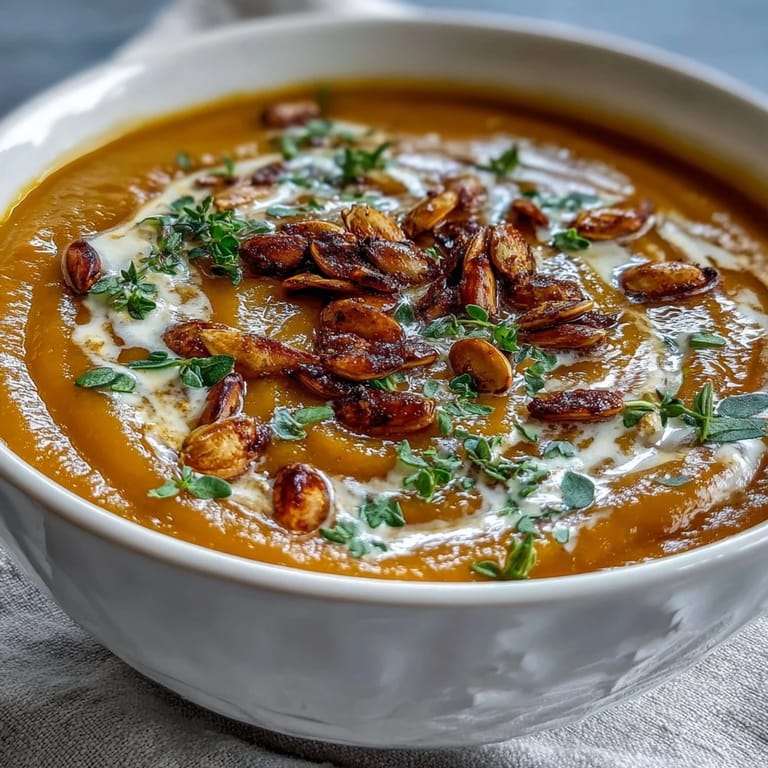
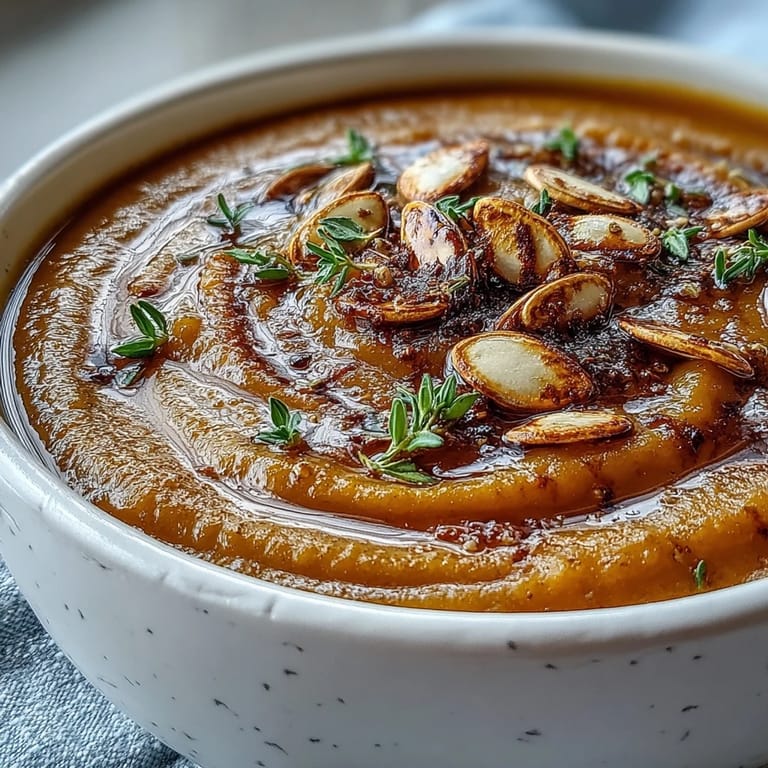
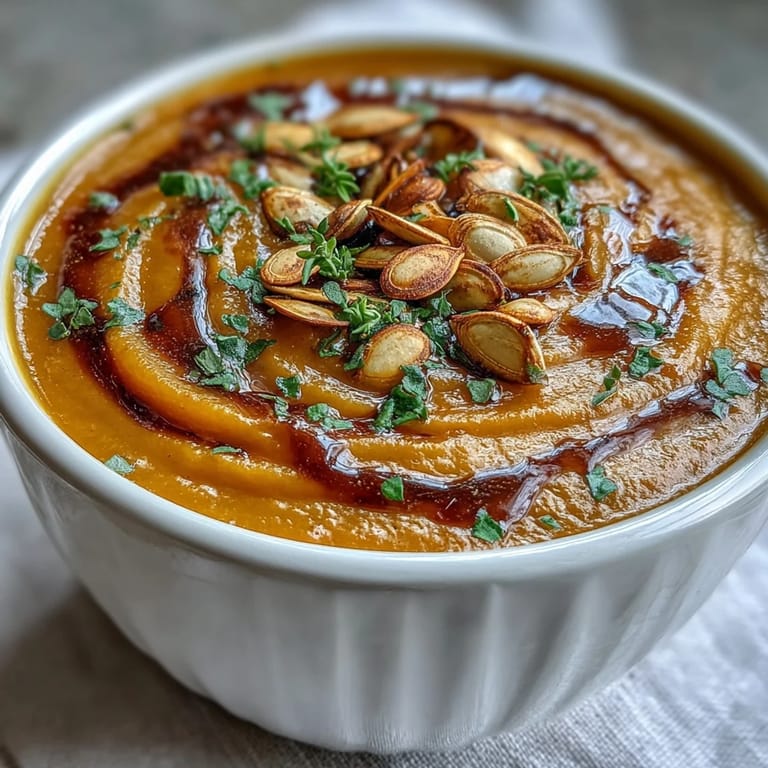
- Toasted pumpkin seeds, maple syrup drizzle, fresh thyme leaves for garnish: These turn a simple bowl into something that feels finished and intentional.
Tired of Takeout? 🥡
Get 10 meals you can make faster than delivery arrives. Seriously.
One email. No spam. Unsubscribe anytime.
Instructions
- Get your oven ready:
- Preheat to 200°C (400°F) and let it come fully to temperature; this ensures your squash caramelizes properly instead of just steaming.
- Prepare and roast the squash:
- Toss your cubed squash with a tablespoon of olive oil, salt, and pepper on a baking sheet, then roast for 30 to 35 minutes until the edges are golden and caramelized, stirring halfway through so everything cooks evenly. The kitchen will smell incredible, and that's your signal that the sugars are concentrating beautifully.
- Build your flavor base:
- While the squash roasts, heat the remaining tablespoon of olive oil in a large pot over medium heat and sauté your chopped onion until it turns translucent and soft, about 4 to 5 minutes, then add the garlic and cook for just another minute until fragrant. This step matters more than it seems; it creates a foundation that makes the whole soup taste more intentional.
- Combine everything:
- Add your roasted squash to the pot along with the vegetable broth, water, maple syrup, nutmeg, and cinnamon, stirring gently to distribute the spices evenly. Bring to a boil, then lower the heat and let it simmer for about 10 minutes so all those flavors can get to know each other.
- Blend until silky:
- Using an immersion blender, purée the soup directly in the pot until completely smooth and creamy, working in batches if using a countertop blender and being careful with the heat. The transformation from chunky to velvety happens in minutes and it's deeply satisfying.
- Finish with cream:
- Stir in your coconut milk or heavy cream and taste carefully, adjusting salt and pepper until it tastes like what you've been imagining. Reheat gently if needed, but don't let it boil once the cream is in.
- Serve with intention:
- Ladle into bowls and top with toasted pumpkin seeds, a light drizzle of maple syrup, and fresh thyme if you have it on hand. These garnishes aren't just decoration; they add texture and remind you why you bothered to make this from scratch.
 Save
Save There's a moment when you're ladling this soup into bowls and the steam rises up and you realize you've created something that tastes like care. That's when cooking stops being a chore and becomes something worth remembering.
Why Roasting Changes Everything
The difference between a roasted and boiled butternut squash soup is the difference between a memory and a forgotten Tuesday. Roasting concentrates the natural sugars and brings out caramel notes that transform the whole dish from a vegetable soup into something that feels almost luxurious. I learned this the hard way after making watery versions for years before finally understanding that the oven is where the magic lives, not the stovetop.
Playing with Texture and Creaminess
Some versions of this soup are poured straight from the blender into bowls, but I've discovered that the immersion blender method gives you more control over how silky or rustic you want the final texture. The coconut milk version tastes lighter and slightly tropical, while cream makes it feel more indulgent and almost like a dessert you can tell people is healthy because there's actual squash in it.
Serving Suggestions and Flavor Pairings
This soup pairs beautifully with crusty bread for soaking up every last spoonful, or you can serve it alongside a simple green salad to balance the richness. For special occasions, I've topped it with crispy sage leaves and a dollop of sour cream, which sounds fancy but requires almost no extra effort.
- A light sprinkle of cayenne pepper adds subtle heat if your household likes things with a little kick.
- Crusty bread or grilled cheese sandwiches turn this into a complete meal without any fuss.
- Leftover soup keeps for three days in the fridge and actually tastes better the next day as flavors develop and deepen.
 Save
Save This butternut squash soup has become the dish I reach for when I want to prove to myself that I can make something from scratch that tastes thoughtful and warm. It's the kind of recipe that reminds you why cooking matters.
Kitchen Guide
- → Can I make this soup ahead of time?
Yes, this soup keeps well for up to 4 days in the refrigerator. The flavors actually develop and improve after sitting overnight. Reheat gently on the stove, adding a splash of broth or water if it has thickened too much.
- → Is roasting the squash necessary?
Roasting intensifies the natural sweetness and creates caramelized edges that add depth. While you could boil or steam the squash, roasting yields superior flavor and is worth the extra time for the best results.
- → Can I freeze this soup?
Absolutely. Freeze in airtight containers for up to 3 months. Thaw overnight in the refrigerator then reheat on the stove. The cream or coconut milk may separate slightly but will blend back together when reheated.
- → What can I use instead of maple syrup?
Honey or brown sugar work well as substitutes. Honey will provide similar sweetness with a slightly different floral note. Brown sugar adds a molasses undertone that also complements the squash nicely.
- → How can I make this soup thicker or thinner?
For thicker soup, reduce the water or simmer longer after blending to evaporate excess liquid. To thin, add more broth or water until you reach your desired consistency. The soup will naturally thicken as it cools.
- → What other garnishes work well?
Try crumbled bacon, roasted pumpkin seeds, a swirl of sour cream, fried sage leaves, or a dusting of additional cinnamon. Croutons or a slice of crusty bread on the side also make excellent accompaniments.